
What Happens During the First 24 Hours of Water Damage Restoration
By Polaris Restoration Group · · 5 min read
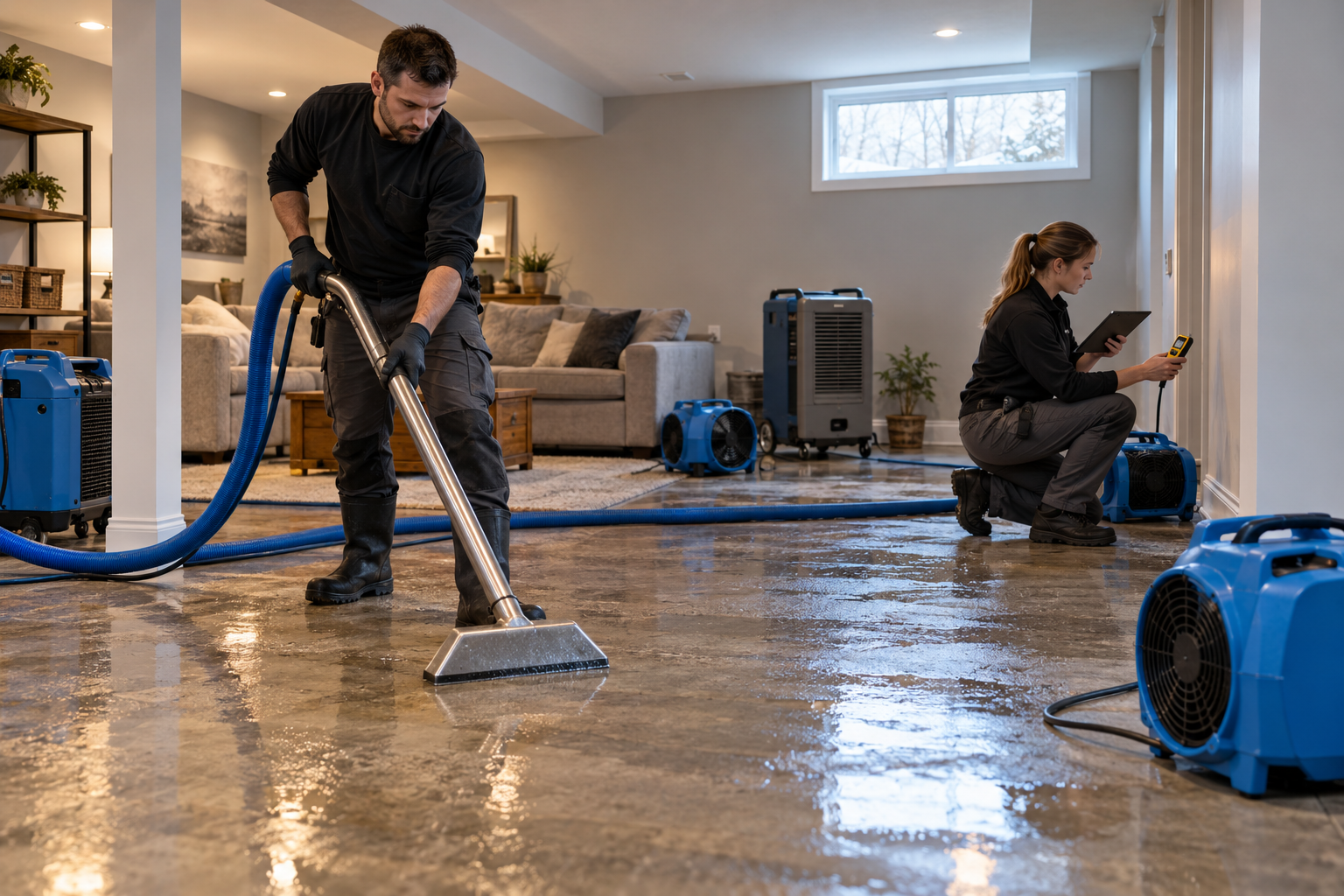
Learn what happens during the first 24 hours of professional water damage restoration, from assessment and extraction to drying and claim documentation in Erin, Ontario.
The first day is about control
The first day after water damage is about controlling the loss and building a clear recovery plan. Whether the cause is a burst pipe, sump pump failure, appliance leak, or basement flood, professional mitigation focuses on safety, stopping the source, removing water, documenting conditions, and starting controlled drying.
The First Call Establishes the Immediate Priorities
A dispatcher will ask what happened, whether water is still entering, which rooms are affected, and whether electrical or contaminated-water hazards may be present. If it is safe to do so, shutting off the water source can help limit additional damage. Avoid standing water near outlets, electrical panels, appliances, or sewage.
The On-Site Assessment Defines the Scope
Once on site, technicians identify the water source, affected materials, and visible safety concerns. Moisture readings help show how far water has travelled into flooring, drywall, insulation, cabinets, or adjoining rooms. The findings guide the recommended extraction, removal, and drying plan, which should be explained before work begins.
Extraction Starts Before Water Spreads Further
Pumps and professional extractors remove standing water from floors, carpet, and lower levels. Faster removal can reduce the amount of water absorbed by building materials. Saturated carpet underlay, drywall, trim, or flooring may need targeted removal when drying in place is not practical. Contaminated water requires additional handling and sanitation precautions.
Drying Equipment Is Positioned and Monitored
After extraction, air movers and dehumidifiers are placed according to the affected area and materials. Equipment may need to operate continuously for several days. Polaris reports that many properties require approximately three to five days of professional drying, although the actual timeline depends on the materials and how far the water migrated.
Documentation Begins on Day One
Photos, moisture readings, and an itemized scope create a record of the loss and the work recommended. This information may support communication with an insurance adjuster, depending on the policy and cause of damage. Coverage is determined by the insurer, so homeowners should review their policy and ask their broker or carrier about specific requirements.
The First Day Sets Up the Rest of the Recovery
The property may not be fully dry within 24 hours, but the source should be addressed, standing water removed, affected areas mapped, equipment running, and next steps documented. Polaris Restoration Group provides 24/7 water extraction, structural drying, monitoring, material removal, and insurance documentation from its Erin base for homes in Guelph, Orangeville, Fergus, and surrounding communities.