How Professional Drying Helps Reduce Mold Risk After Water Damage
By Polaris Restoration Group · · 4 min read
Learn how extraction, monitored drying, and preventive treatment help reduce mould risk after water damage in Erin, Ontario.
Mould prevention starts with moisture control
Mould prevention after water damage begins with removing moisture quickly and thoroughly. In Erin, Ontario, floodwater can move into drywall, flooring, insulation, and framing before the full extent is visible. Professional extraction and monitored structural drying help reduce the damp conditions that may support mould growth.
Extraction Is the First Step
Standing water should be removed before drying equipment can work efficiently. Pumps and professional extraction tools can remove water from affected spaces, carpets, and accessible cavities. Contents may also need to be moved or assessed so wet surfaces can be reached and belongings can be documented before disposal or restoration decisions are made.
Moisture Mapping Finds Hidden Wet Areas
Water can travel beneath flooring, behind baseboards, and into wall cavities. Moisture meters and other assessment tools help technicians identify affected materials and establish a drying plan. These readings do not detect mould by themselves, but they help show where moisture remains and where closer inspection may be appropriate.
Drying Equipment Needs Ongoing Monitoring
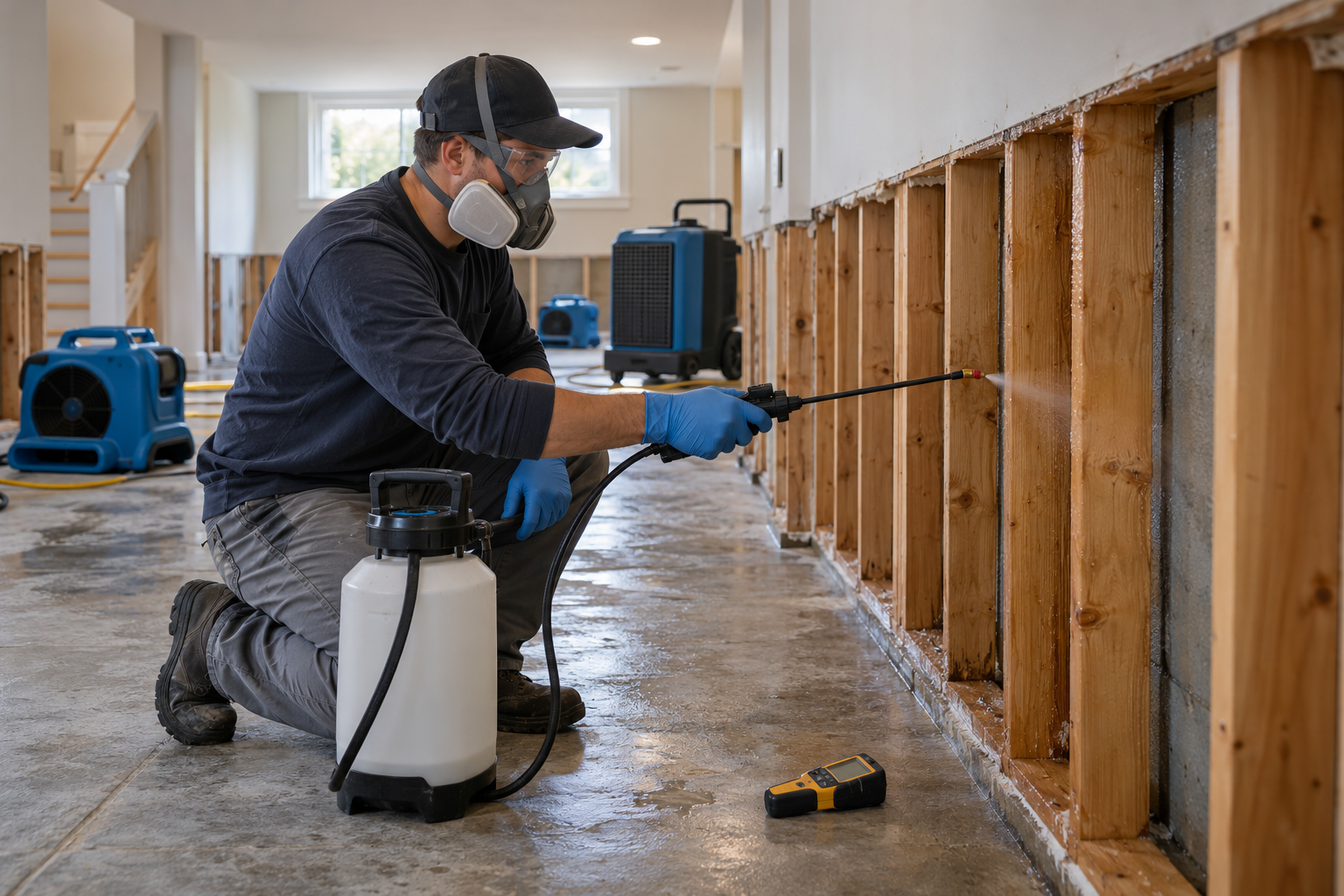
Air movers and dehumidifiers are positioned according to the size of the affected area and the materials involved. Technicians can check equipment and take repeat readings as drying progresses. If moisture levels stop improving, the setup may need adjustment or an inaccessible cavity may need additional attention.
Preventive Treatment Supports the Drying Plan
Depending on the water source and affected materials, an appropriate antimicrobial treatment may be applied to exposed surfaces during restoration. Treatment supports the overall mould-prevention plan, but it does not replace extraction, removal of unsalvageable materials, or complete structural drying. Product selection and application should follow the project conditions.
Drying Is Verified Before Repairs Begin
A surface may look dry while moisture remains inside framing or beneath flooring. Final readings help determine whether the affected structure has reached an appropriate dry condition before new drywall, flooring, or finishes are installed. Closing damp materials inside an assembly can allow problems to remain hidden.
Water Damage Help in Erin and Surrounding Communities
Polaris Restoration Group provides water and flood damage response, extraction, structural drying, preventive treatment during drying, contents assessment, and insurance documentation. Available 24/7. Service coverage includes Erin, Guelph, Orangeville, Fergus and surrounding communities.
Dealing with flooding, standing water, or damp materials?
Call Polaris Restoration Group at 289-630-0911 for water-damage help in Erin and surrounding communities. Available 24/7. Avoid standing water near electrical sources, and do not discard damaged belongings before they are documented for your insurer.