
Burst Pipe Water Damage in Erin: A Winter Guide for Homeowners
By Polaris Restoration Group · · 6 min read
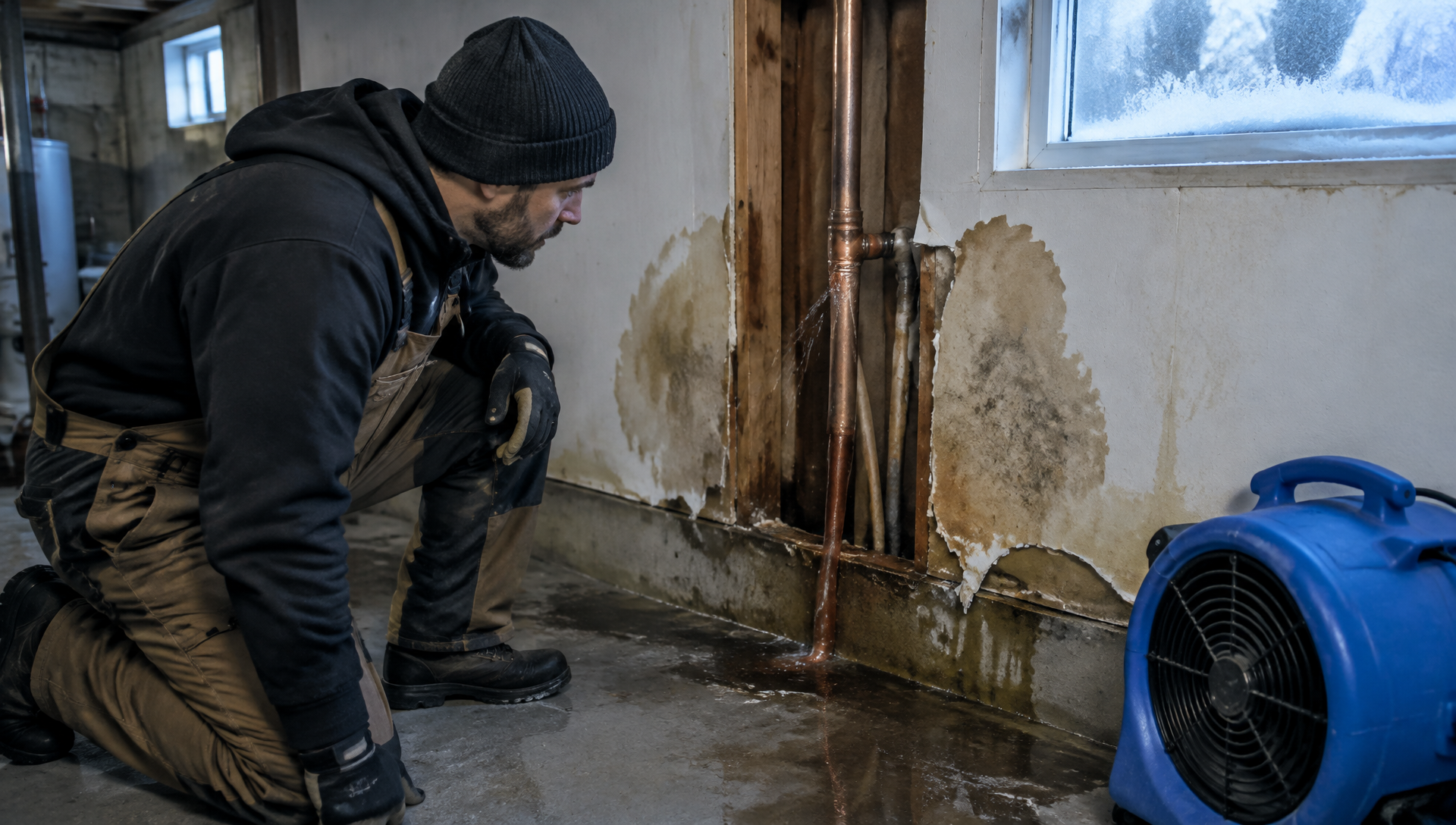
Burst pipe water damage in Erin, Ontario: how to spot a frozen pipe, what to do when one bursts, and how extraction and structural drying protect your home.
Burst pipe water damage is a winter reality in Erin
Burst pipe water damage tends to show up at the worst possible moment. A cold snap rolls through Erin, Ontario, a pipe in an outside wall or crawl space freezes overnight, and by morning there is water coming through the ceiling or spreading across the basement floor. If it has happened to you, take a breath. This guide covers why pipes burst, what to do right away, and what professional cleanup looks like.
The good news is that clean water from a supply line is usually easier to deal with than flood water or sewage. The catch is that it moves fast and soaks into drywall, flooring, and insulation, so what you do in the first little while really matters.
Why pipes freeze and burst
When water freezes inside a pipe, it expands. That builds pressure in the line until something gives, often at a fitting or a weak spot. Pipes that tend to be most at risk in older homes and rural properties around Erin, Guelph, Orangeville, and Fergus include:
- Supply lines running through exterior walls or under windows
- Pipes in unheated crawl spaces, garages, or cold rooms
- Outdoor hose bibs that were not shut off and drained for the season
- Lines near a drafty sill plate or poorly insulated rim joist
- Plumbing in a cottage, rental, or home left empty over the holidays
Warning signs of a frozen pipe
Catching a frozen pipe before it splits can save you a lot of trouble. Keep an eye out for these clues on very cold days:
- A tap that only trickles or will not run at all
- Frost on an exposed section of pipe
- Strange gurgling or banging when you open a faucet
- A damp spot or bulge appearing on a wall or ceiling
What to do when a pipe bursts
If water is actively spraying or pooling, here are the steps that help most while you wait for help to arrive:
- Shut off the main water valve right away. In many homes it is in the basement near the front wall, close to the water meter
- Stay out of standing water near outlets, appliances, or your electrical panel, and switch off power to the area only if you can do it from a dry spot
- Open a few taps to drain the remaining water and relieve pressure in the lines
- Move electronics, documents, rugs, and valuables to a dry area
- Take photos and video of the damage, the pipe, and affected belongings before anything is moved or thrown out
Why burst pipe water damage spreads farther than it looks
A burst pipe can release a lot of water in a short time, and it rarely stays where you can see it. Water wicks up drywall, runs along the top of a subfloor, and settles into wall cavities and insulation.
That is why a floor that looks dry on the surface can still be holding moisture underneath. Left alone, that hidden moisture can lead to warped flooring, stained ceilings, lingering odour, and the damp conditions that may allow mould to grow.
How professional water damage restoration handles a burst pipe
Every home is a little different, but here is what you can generally expect when our team responds to burst pipe water damage.
Assessment and moisture mapping
Technicians confirm the water is shut off, check for safety concerns, and use moisture meters to map how far the water has travelled. This shows which materials are wet, including spots behind baseboards and under flooring that you cannot see.
Water extraction and material removal
Standing water is extracted from floors, carpet, and lower levels. Materials that cannot be dried in place, such as saturated carpet underlay or the lower section of soaked drywall, may need to be carefully removed so the structure underneath can dry properly.
Structural drying and monitoring
Air movers and dehumidifiers are set up based on the size of the area and the materials involved. Our team checks readings as drying progresses and adjusts the setup if needed. Drying is confirmed before any repairs close up walls or floors, which helps reduce the risk of mould and odour down the road.
When a burst pipe floods your basement
Many burst pipes in our area end up as basement problems, either because the pipe was in the basement to begin with or because water found its way down. A finished rec room with carpet, drywall, and stored belongings can take on a lot of water quickly. In that case, the cleanup may look a lot like basement flooding work: extracting water, removing wet finishes, drying the foundation walls, and getting the space usable again.
If you notice an odd smell or the water came up through a floor drain instead of from a supply line, let us know. A freeze can also affect drain lines, and water that may be contaminated needs to be handled with extra care.
A careful word about insurance
Many Ontario home insurance policies treat a sudden and accidental pipe burst differently from damage that builds up slowly over time. Some policies also have conditions about heating a home or shutting off the water while it is empty for an extended period. Coverage varies by policy, so the best step is to review your policy wording or call your broker to confirm what applies to you.
What Polaris Restoration Group can do is document the loss with photos, moisture readings, and an itemized scope of work. That record may help when you speak with your adjuster.
How to help prevent frozen pipes this winter
A little preparation in late fall goes a long way:
- Shut off and drain outdoor hose bibs before the first hard frost
- Add pipe insulation to exposed lines in crawl spaces, garages, and cold rooms
- Seal drafts around sill plates, rim joists, and where pipes enter the house
- Keep the heat on when you travel, and ask someone to check the house
- On very cold nights, open cabinet doors under sinks on exterior walls so warm air can reach the pipes
Burst pipe water damage FAQ
Can I dry burst pipe water damage myself with fans? Fans can help with surface water, but they usually cannot reach moisture trapped inside walls, under flooring, or in insulation. Moisture readings show whether the structure is actually dry.
Do I need to remove drywall after a burst pipe? Not always. It depends on how long the drywall was wet, how high the water wicked, and whether it can be dried in place. An assessment helps decide what can be saved.
How long does drying take after a burst pipe? It depends on the materials and how far the water spread. Drying is monitored with readings and continues until the affected areas reach an appropriate dry condition.
Should I call a plumber or a restoration company first? Shut off the water first. A plumber repairs the pipe, and a restoration company handles the water, drying, and documentation.
Need help with burst pipe water damage in Erin?
Call Polaris Restoration Group at 289-630-0911 for burst pipe water damage help in Erin and surrounding communities. Available 24/7. Our Erin-based team serves Erin, Guelph, Orangeville, Fergus and nearby neighbourhoods. Shut off your main water valve, avoid standing water near electrical sources, and hold on to damaged belongings until they are documented for your insurer.